
Pressure boosting stations
Booster Stations – An Energy-Efficient Solution for Pressure Boosting
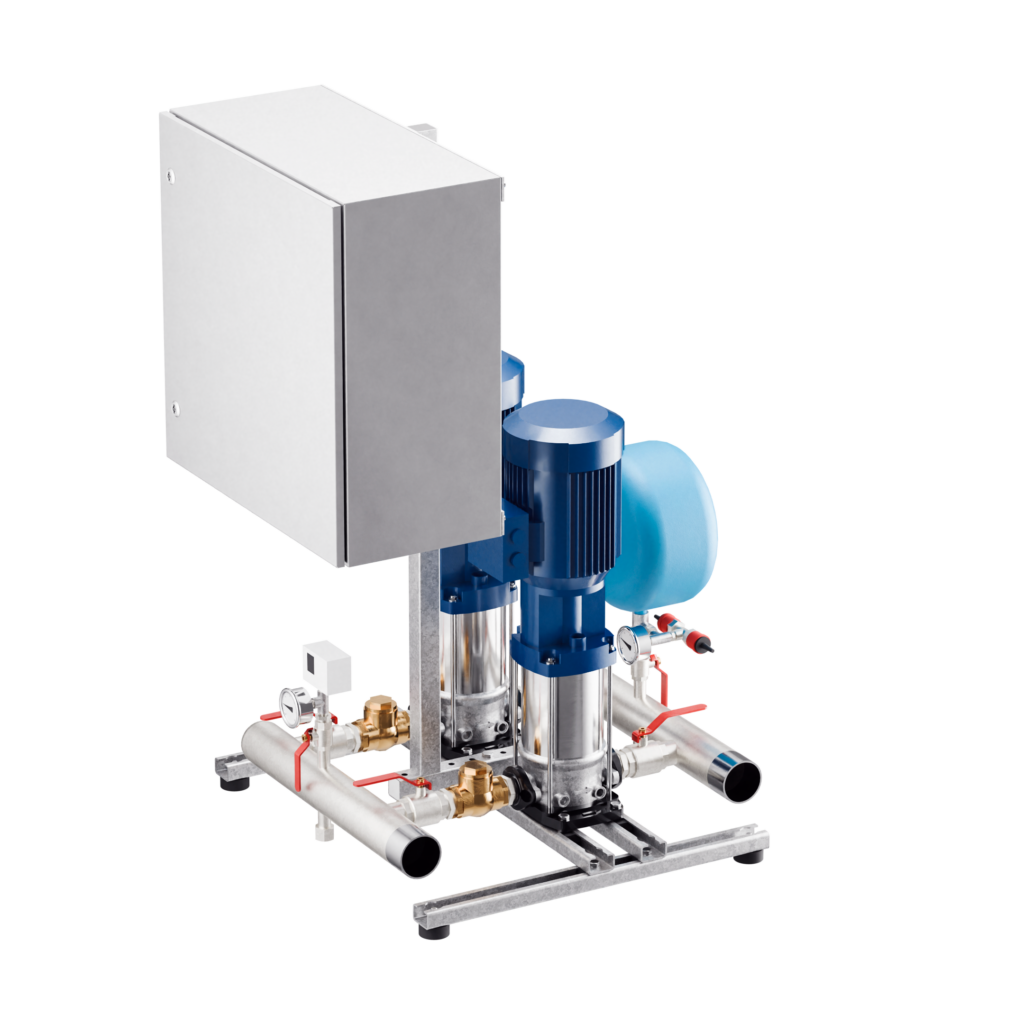
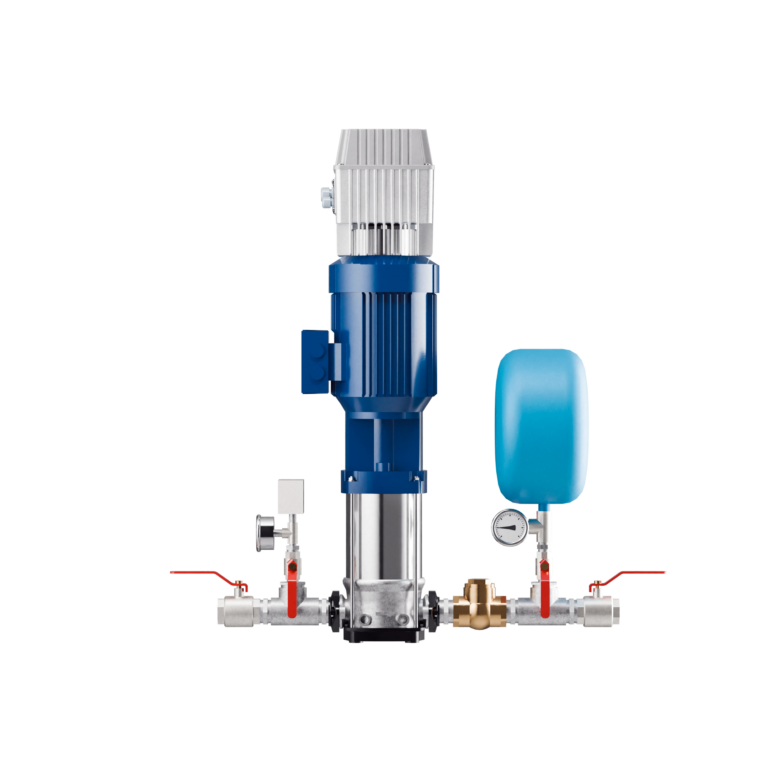
BM1 Booster Station
Applications: Irrigation systems and pressure boosting Materials: Stainless steel (AISI 304)Stainless steel (AISI 316) Fluids:Clean liquids BM1 – Single-Pump Booster Stations Kolmeks BoostMaster1 (BM1) is a single-pump booster station equipped with an integrated frequency converter. The BM1 booster station is available in the power range of 0.37–22 kW and is manufactured from stainless steel or acid-resistant […]

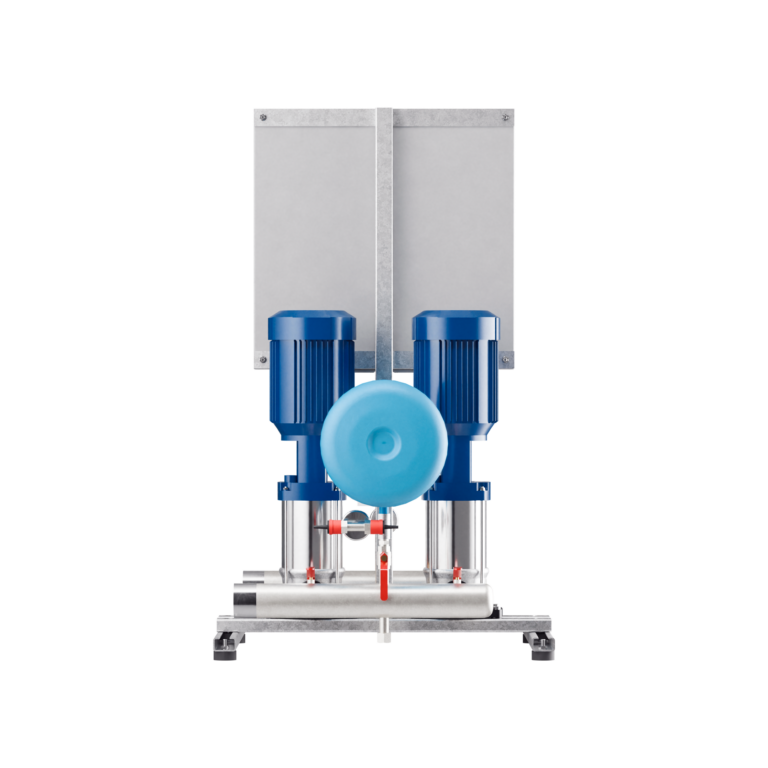
BM2 Booster Station
Applications: Irrigation systems and pressure boosting Materials:Stainless steel (AISI 304)Stainless steel (AISI 316) Fluids:Clean liquids BM2 – Two-Pump Booster Stations Kolmeks BoostMaster2 (BM2) is a two-pump booster station equipped with separate control panel-mounted frequency converters. The stations are available in the power range of 2 × 0.75–2 × 45 kW and are manufactured from stainless […]
Pumpselector
Choosing the right pump model for your specific requirements.
Operating Principle and Control of Booster Stations
Booster stations are ready-to-install systems that maintain a desired outlet pressure while automatically adapting to variations in consumption and inlet pressure.
Booster stations operate energy efficiently by utilizing the latest frequency converter technology: during low demand, the pump runs at a low speed, and as demand increases, the rotational speed automatically increases. When consumption stops, the station enters standby mode and restarts automatically when the outlet pressure drops below the set level.
Booster Station Models and Design
The booster station product family is comprehensive, ranging from single-pump systems for buildings to demanding two-pump stations for process industry applications.
Single-pump booster stations (BM1) are available in sizes 1″–2″ or DN25–DN100 with power ratings from 0.37 to 22 kW.
Two-pump booster stations (BM2) are available in sizes 2″–2½″ or DN50–DN150 with power ratings from 2 × 0.75 to 2 × 45 kW.
Booster stations are manufactured from stainless steel AISI304 or stainless steel AISI316.
The A version includes one or two centrifugal pumps with electric motors equipped with integrated frequency converters. In addition, the discharge side includes a pressure transmitter, pressure gauge, diaphragm expansion vessel, check valve, and shut-off valve.
The B version includes all features of the A version, plus a suction-side manifold equipped with a pressure switch (dry-run protection), pressure gauge, and shut-off valve. The pumps used in booster stations are either multistage or single-stage dry motor centrifugal pumps compliant with EcoDesign directive requirements.
Applications and Benefits
Kolmeks booster stations are used not only in industrial processes but also in building services and municipal water utilities, as well as applications such as golf course irrigation systems. Typical applications include water intake plants, pressure boosting and irrigation systems for buildings and industry, residential construction, schools and daycare centers, spas and swimming halls, shipbuilding industry and flue gas scrubbers, commercial buildings, and hospitals and care facilities.
- Thanks to frequency converter control, booster stations start smoothly, preventing pressure surges in pipelines.
- Soft start and stop also extend the service life of piping systems. Stations can operate autonomously, providing fault and operation data directly to monitoring systems, or they can be fully controlled via a building management system.
- Electric motors are squirrel-cage motors designed for pump applications, offering high efficiency and low noise levels.
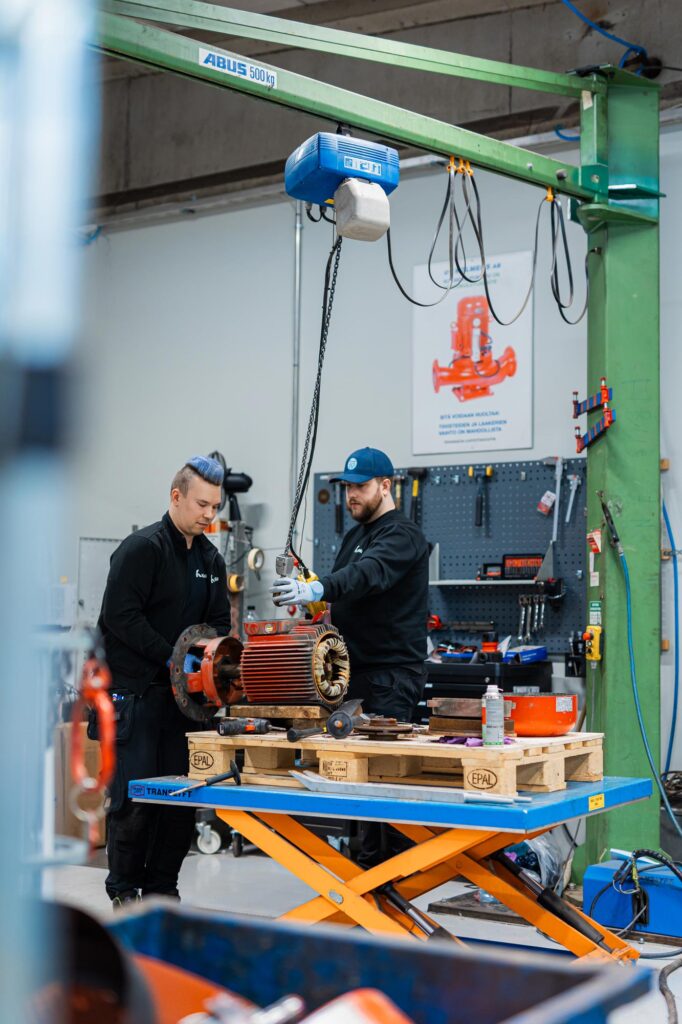
24/7 maintenance and spare parts services
Kolmeks provides spare parts and maintenance services for pumps and air separators. We service pumps of various sizes reliably and professionally, ensuring their efficient and trouble-free operation.
We offer responsive maintenance support and spare parts services to keep our customers’ systems up and running in all situations.